


Wire Forming Tolerances: What to Confirm Before Mass Production?

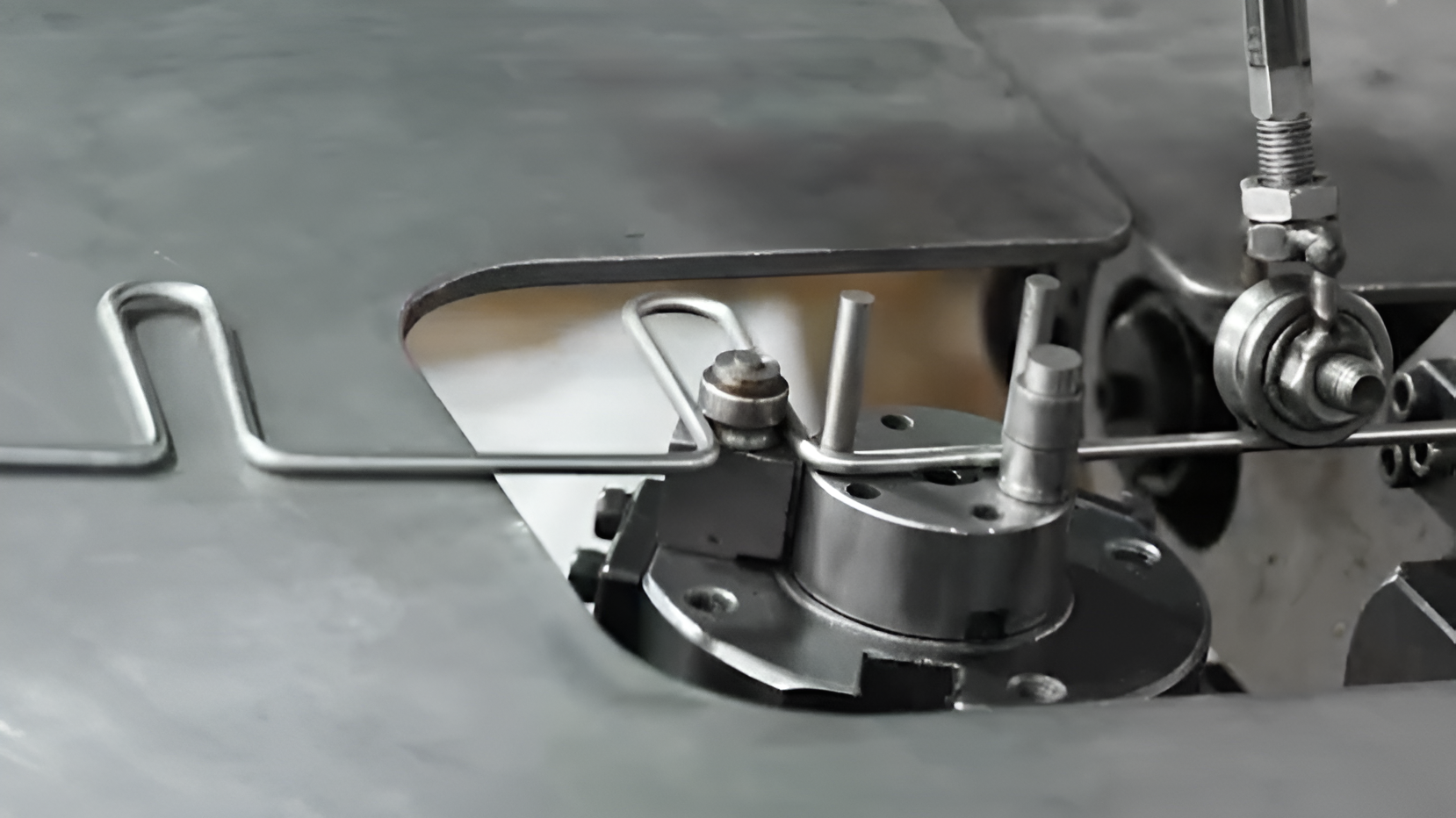
Tolerances are a major concern for both our OEM production processes (especially wire forming) and customers’ procurement activities.
They encompass various dimensions, such as wire diameter, angle measurements, and geometric specifications. Products often fail to integrate precisely with designated equipment due to tolerance-related discrepancies.
During the drawing review stage, we verify a product’s critical tolerances. Errors in these wire forming critical tolerances can lead to high costs for both parties.
– Angular tolerance defines the permissible deviation between the actual bent angle and the design angle.
For example, a design angle of 90° with an allowable tolerance of ±2° permits actual angles between 88° and 92°.
We have accumulated data on bending spring-back compensation for different materials, ensuring angular consistency across batches. If a product requires specific angles, we conduct multiple tests to achieve optimal results either.
– Geometric tolerance pertains to deviations in the overall shape of the product.
This includes checking flatness to ensure the part isn’t twisted, verifying symmetry to meet requirements for symmetrical components, and checking positional accuracy to ensure the correct spatial relationships among different parts of the formed component.
– Wire diameter tolerance refers to the permissible range for the raw material diameter.
For instance, if we procure iron wire with a nominal diameter of 2.0 mm and a tolerance of ±0.03 mm, the actual diameter may range from 1.97 mm to 2.03 mm.
Wire diameter tolerance serves as the baseline for all subsequent tolerances. We enforce strict incoming inspection standards for raw materials, with clear requirements regarding precision grades.
Furthermore, the fixtures and feed channels of our wire-forming equipment (for cutting and bending) are designed based on the nominal diameter. If the raw wire is oversized, increasing feed resistance; or undersized, causing instability during internal positioning. It can amplify errors in the subsequent forming process.
Common inquiries related to tolerances include questions such as:
– “Why do slight deviations in angles and dimensions prevent the product from fitting my equipment?“
Such discrepancies often result from the cumulative effect of tolerances at various production stages. By clarifying critical tolerances and highlighting areas requiring strict attention during the initial drawing review, we can significantly enhanced the final product yield.
– “Why do different factories produce wire part with varying dimensions from the same drawing?“
In the metal processing industry, the forming of imported wire stock represents a downstream stage of the supply chain. Since factories rely on different raw material suppliers, each with their own standards for wire diameter tolerances and precision grades, slight variations in the finished products are unavoidable.
If your product has specific material and tolerance requirements, please feel free to discuss them with us. We review tolerances range at the drawing stage to support dimensional accuracy across batches.
Foshan ATA METAL’s technical team is ready to assist with your project and help bring your product to fruition.
One thought on “Wire Forming Tolerances: What to Confirm Before Mass Production?”